
Lough on Data
Reliable data systems that reflect the business, built for the team that runs them #
Lough on Data helps growing teams and early startups turn brittle pipelines into reliable foundations—so people can trust the data they use to decide, build, and operate.
When data arrives late, breaks silently, or needs constant manual repair, the problem is rarely one bad job. It is the system around it: how data enters, how it is modeled, how failures are found, and who can operate it when something changes.
Build in public
View GitHub profile →Reliability is a system
Build foundations around the work.
When data arrives late, breaks silently, or needs constant manual repair, the problem is rarely one bad job. It is the system around it.
- SourcesWhere data begins
- IngestionHow it arrives
- ModelsHow it becomes useful
- Quality & operationsHow it stays dependable
- Trusted decisionsWhat the system enables
Focused work
Where I can help.
-
01
Platform Assessment
Find the architecture, reliability, cost, modeling, and delivery risks worth addressing first.
-
02
Pipeline Buildout
Build dependable ingestion, transformation, orchestration, and observability paths.
-
03
Warehouse & Modeling
Make analytical storage, models, metrics, and semantic layers easier to trust and use.
-
04
Data Reliability
Add the quality controls, documentation, and operating practices that keep systems useful.
Public architecture evidence
Databox, in the open.
A single-operator data platform that brings public bird observations, weather, and streamflow into one queryable warehouse.
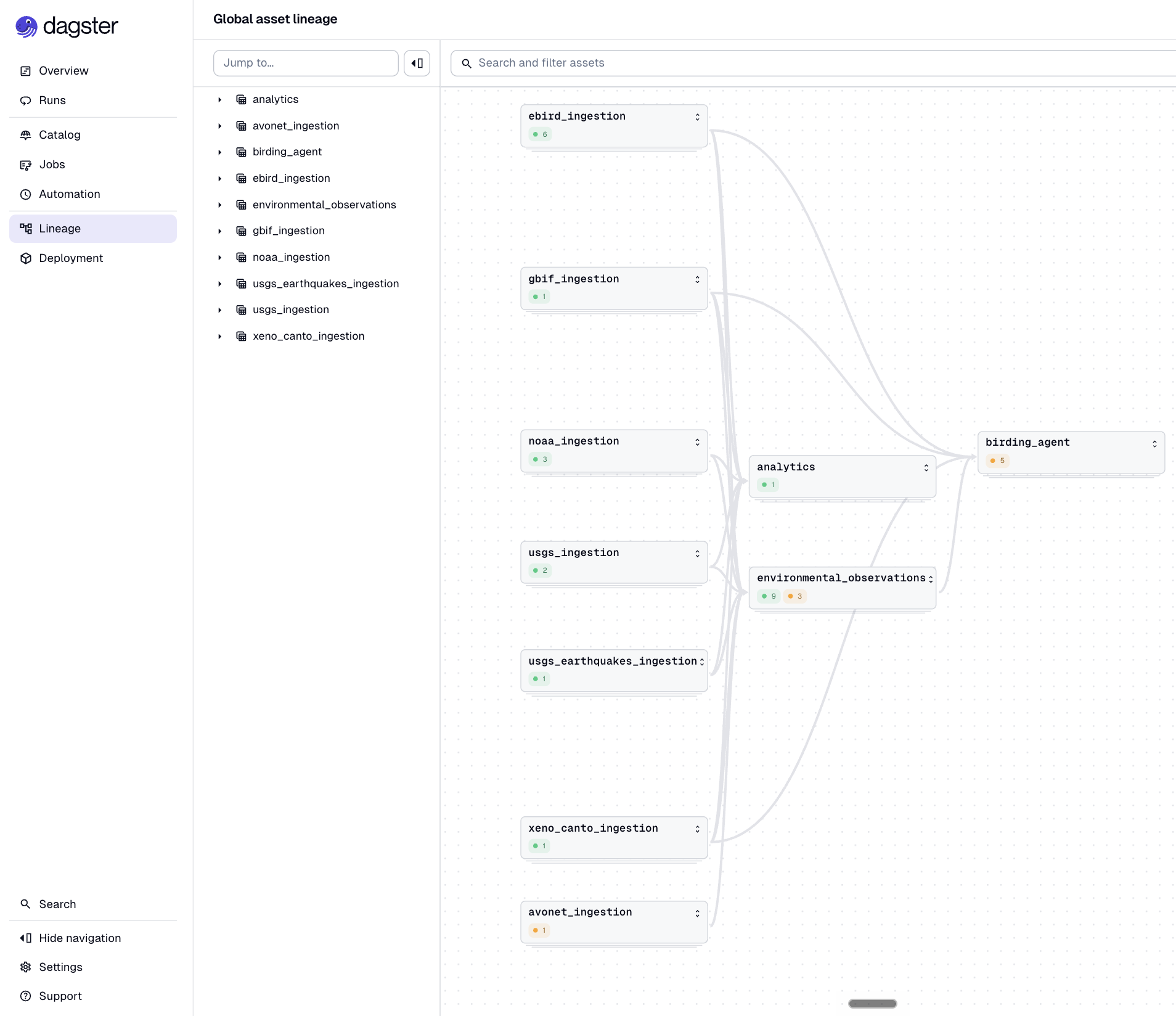
- eBird, NOAA, and USGS
- Shared spatial grain
- DuckDB warehouse
- Public sources join at H3 cells by day.
- Quality checks can gate downstream materialization.
- Models, columns, checks, and lineage stay inspectable.
The operator behind it #
I’m Connor Lough, an independent data engineer working remotely with teams worldwide. I write code to solve useful problems—the best result is usually a system that makes someone else’s work quieter and clearer.
Start with the problem #
Email me a little context: what is unreliable, who relies on it, and what outcome you need. We’ll talk through the fit and, if it makes sense, define a focused next step.